
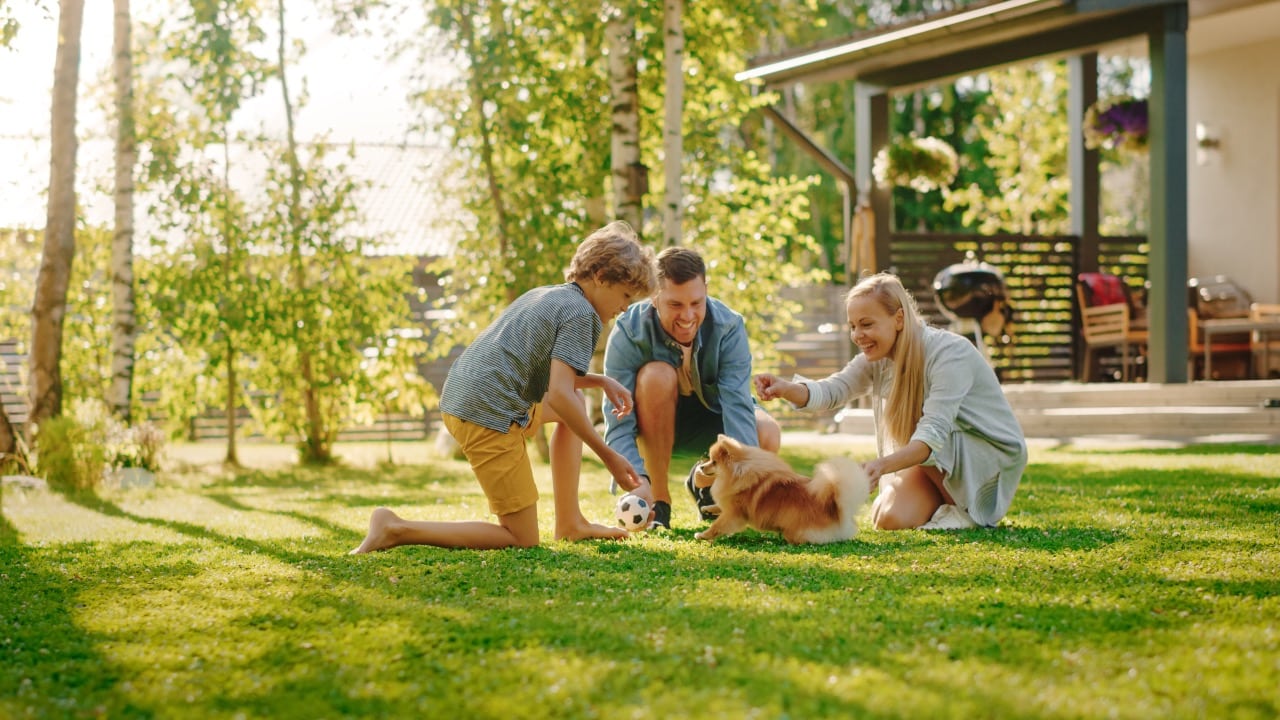
Pet-Safe Lawn Care: Protecting Dogs, Kids, and Your Yard
If you’ve ever watched your dog roll in the grass or your kids play barefoot in the yard, you’ve probably wondered: Is my lawn safe for them? The good news is that you can have a beautiful, healthy lawn without compromising the safety of your family and pets. It just takes a little know-how and the right approach.
Why Pet-Safe Lawn Care Matters
Dogs are especially vulnerable to lawn chemicals. They roll, dig, and lick their paws—behaviors that put them in direct contact with whatever’s been applied to your grass. Kids aren’t far behind, playing close to the ground and touching their faces without washing hands first. Broad-spectrum lawn chemicals can linger in soil or get tracked indoors, creating unnecessary exposure risks. Dogs exposed to certain synthetic herbicides face increased cancer risk, particularly lymphoma.
The solution? A thoughtful approach that prioritizes prevention and uses treatments only when truly necessary.
The Pet-Safe Lawn Care Philosophy
The best pet-safe lawn care follows an Integrated Pest Management (IPM) approach. This means focusing on soil health, cultural practices, and prevention first. When treatments are needed, spot-apply rather than blanket-spray your entire yard. This minimizes your dog’s and kids’ exposure while still keeping your lawn looking great.
Re-entry timing is critical. Even with pet-safe products, wait until the lawn is completely dry—typically 24 to 48 hours after application—before letting pets and children back on the grass.
Choosing Safe Fertilizers and Treatments
Go organic when possible. Organic fertilizers like compost, alfalfa meal, feather meal, or fish-based blends are much safer than synthetic products if accidentally ingested in small amounts. Corn gluten meal works as both a pre-emergent weed suppressor and nitrogen source, and it’s nontoxic (though dogs who eat too much straight from the soil may experience temporary digestive upset).
Pet-safe commercial blends are available and often labeled “safe for pets and children” after drying. Iron-based herbicides like FeHEDTA are considered low-toxicity and pet-safe once dry, and they’re effective on dandelions and clover.
Use caution with natural attractants. Blood meal, bone meal, and fish meal are natural, but they smell irresistible to dogs. Your pup may dig up the lawn or eat large amounts, leading to digestive issues or even pancreatitis.
Avoid these entirely: Synthetic herbicides like 2,4-D, dicamba, and glyphosate are linked to increased cancer risk in dogs. Insecticides such as imidacloprid, carbaryl, or permethrin are toxic to pets—especially cats—and dangerous if tracked indoors. Skip “weed-and-feed” combos, which spread herbicide across your entire lawn and increase exposure.
Dog-Friendly Lawn Practices
Water in all treatments thoroughly and let them dry completely before your pets go outside. Rain or irrigation after application helps reduce residue exposure.
Consider training your dog to use a designated potty area with mulch or pea gravel. This reduces lawn burn and limits exposure to treated zones. Rinse your dog’s paws with water after walks or lawn play, especially during treatment seasons.
Spot treatment is always better than broadcast application—it minimizes the chemical footprint on your property.
Natural Alternatives That Work
Manual weeding is 100% pet-safe and effective for scattered dandelions. Mulching and maintaining dense turf prevent weed germination without chemicals. Beneficial nematodes control grubs naturally without harming pets, and products like neem oil or horticultural vinegar work for controlled spot applications.
Build a Healthier Lawn Naturally
Mow high—3 to 3.5 inches—to improve resilience against weeds and urine spots. Taller grass shades out weed seeds and dilutes urine concentration. Leave clippings on your lawn to recycle nutrients and reduce fertilizer needs. Overseed thin areas in fall to maintain dense turf that naturally crowds out weeds.
A Local Partner for Safe Lawn Care
Scott’s Lawn Care offers pet- and child-safe lawn treatment programs using carefully selected products that meet safety re-entry guidelines. Their team understands Minnesota families’ needs and provides services that prioritize health, safety, and convenience—with options for organic weed control, targeted spot treatments, and responsible application timing.
Your Next Step
A beautiful lawn and a safe space for your loved ones aren’t mutually exclusive. Choose natural treatments when possible, time applications carefully, and always wait until products are fully dry before letting pets and kids back outside. Your yard can be both gorgeous and safe.